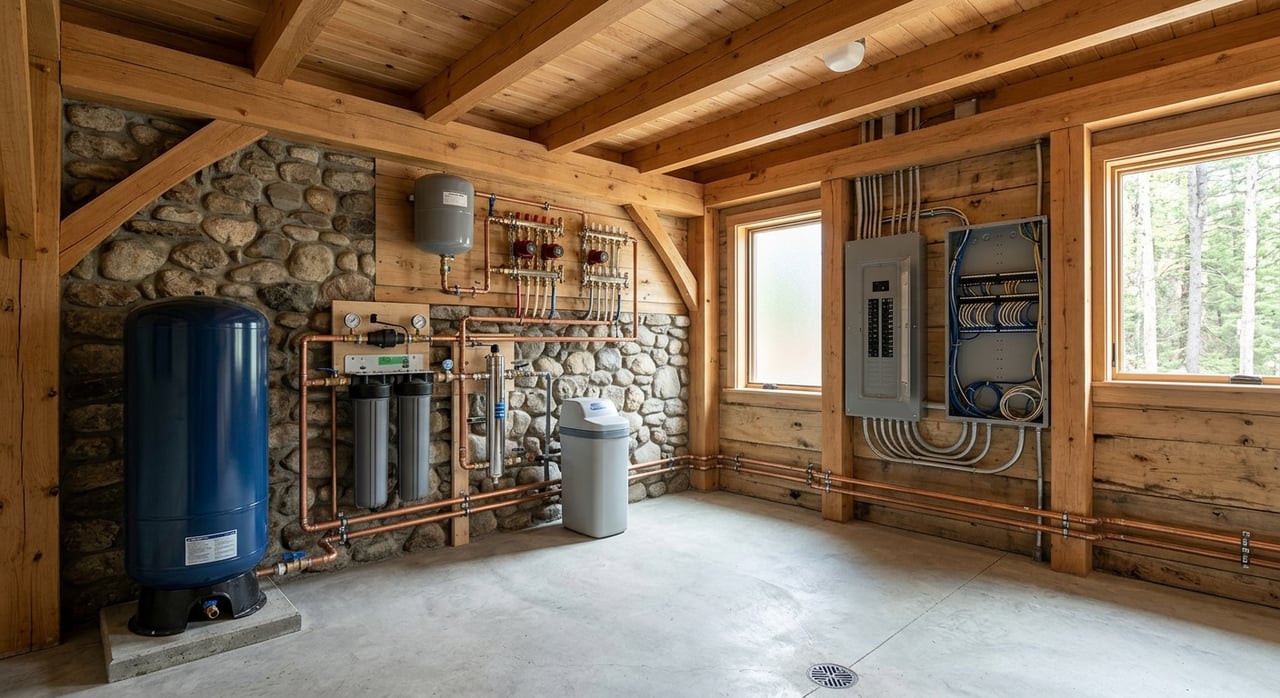
If you are buying land or a home in Cameron, the house is only part of the story. In this part of Madison County, your day-to-day comfort can depend just as much on the well, septic system, and power setup as it does on square footage or views. When you understand those systems before you buy, you can plan with more confidence, avoid surprises, and make smarter decisions about rural property. Let’s dive in.
Why rural infrastructure matters in Cameron
Cameron sits in a largely rural part of Madison County, where land use still centers heavily on ranching, farming, construction, and recreation. Madison County spans about 3,603 square miles, with roughly 48% privately owned land, so private infrastructure is a normal part of property ownership here.
That means many buyers are not just evaluating a home or parcel. You are also evaluating how water is supplied, how wastewater is handled, and how electricity and internet service fit your plans for full-time living, part-time use, or future building.
Wells in Cameron: what to verify first
A private well can be a major asset, but the key question is not simply whether a well exists. You also want to know how it performs, what records are available, and whether the site allows for future flexibility if something changes.
According to Montana DNRC, you generally do not need a statewide permit before drilling a private well, but local restrictions can still apply. Before drilling, DNRC advises checking with the county sanitarian, county floodplain coordinator, DNRC regional office, and DEQ.
Start with the well log
One of the most important documents for a rural property is the well log, sometimes paired with the GWIC record. These records can show the well depth, water level, and geologic conditions encountered during drilling.
If you are buying an existing home or evaluating land with a well already in place, ask for a copy early. It can help you understand what kind of water source you are inheriting and whether local conditions suggest any limits or added costs.
Ask about production, storage, and pressure
DNRC notes that an average household uses about 200 to 400 gallons per day. That makes well production more than a technical detail. It affects how comfortably the property can support everyday use.
Ask how much water the well produces and whether the system relies on extra storage or pressure support. A low-producing well does not always mean a property is unusable, but it may mean the setup needs a storage tank or other planning to meet household demand.
Check siting and replacement options
Well location matters just as much as performance. DNRC says a well should be at least 10 feet from a property line, 50 feet from septic tanks or sewer lines, and 100 feet from a drainfield, though local rules can be stricter.
For subdivision lots, DEQ also notes that some parcels have a specific approved well location or drilling area shown on the lot layout. That is why buyers should confirm not only where the current well sits, but also whether a replacement or second well could legally be sited in the future.
Test the water regularly
Private wells are not routinely monitored by government or municipal agencies. MSU Extension recommends annual bacteria and nitrate testing, which makes current water test results an important part of buyer due diligence.
If recent testing is not available, that is worth noting before closing. Clean, usable water is essential, and regular testing helps you understand both current conditions and future maintenance needs.
Septic systems in Madison County
In Cameron, septic due diligence should be treated as a core part of the purchase process. Madison County requires a permit for all septic systems or wastewater treatment systems, and all wastewater systems must be installed by a Madison County licensed installer.
The permitting path can differ depending on the parcel. For lots under 20 acres with DEQ approval, the county wants the DEQ subdivision approval and a site plan showing approved drainfield and well locations. For larger lots or older parcels, a nondegradation analysis may be required.
Understand what type of system you have
Not every septic system works the same way. Some are conventional systems, while others are advanced systems that may use aerators, disinfection devices, pumps, float switches, alarms, or other mechanical and electrical components.
That difference matters because advanced systems can bring added service needs and operating costs. If you are buying a home with an alternative system, ask whether there is a service contract, whether alarms are installed, and what routine maintenance has been required.
Maintenance is part of ownership
Montana DEQ guidance says septic systems generally should be inspected annually and pumped every 3 to 5 years. Madison County’s revised wastewater regulations also place responsibility for proper operation, maintenance, and cleaning on the property owner.
In practical terms, that means a septic system is not a set-it-and-forget-it feature. Good records and regular upkeep can help protect groundwater, support system performance, and reduce the risk of expensive surprises later.
County approval has limits
Madison County requires inspection before backfill unless permission is granted otherwise. The county also states that final approval is not a guarantee of workmanship or future operation.
For buyers, that is an important reminder. A permit history is valuable, but it should not replace common-sense review of maintenance records, age, condition, and any signs that the system may need attention.
Watch for common septic issues
DEQ identifies several common mistakes that can shorten septic life or cause failures. These include using too much water, flushing household chemicals or grease, draining hot tubs into the system, and driving or placing structures on the drainfield.
Montana guidance also warns about freeze issues in cold weather. In a place like Cameron, where winter conditions are a real part of ownership, that seasonal factor deserves attention when you evaluate a system and plan future use.
Power and internet: do not assume availability
For many rural buyers, utilities can feel straightforward until they are not. In Cameron, it is smart to verify electrical service and internet options directly instead of assuming nearby service means your parcel has the same setup.
NorthWestern Energy serves electricity across the western two-thirds of Montana, making it the main regional utility to verify for Cameron-area parcels. If you are looking at raw land or a home outside a denser cluster of development, ask where service currently exists and what is already in place on the property.
Internet service can vary by location
Internet in this area is much more location-dependent than electric service. 3 Rivers Communications lists nearby service areas including Ennis/Harrison, Sheridan, Twin Bridges, and Virginia City, while satellite service is also marketed for Cameron, with availability and speeds varying by location and time.
Montana broadband funding is also being directed toward fiber, fixed wireless, and low-earth satellite technologies for unserved and underserved locations. That is promising for the long term, but buyers should still verify what is actually available at a specific address or parcel today.
Backup power may matter more than you think
Some septic systems rely on pumps, floats, alarms, or other electrical components. If a property has one of those systems, ask what happens during a power outage and whether there is a backup power plan.
That question is especially useful if you expect seasonal weather interruptions, part-time occupancy, or a more remote homesite. A simple conversation now can help you understand how resilient the property will be in real-world conditions.
What to ask for before you buy
In rural Cameron transactions, records tell an important part of the story. The more complete the file, the easier it is to evaluate current condition, future maintenance, and whether the property fits your plans.
Ask for:
- The well log and any GWIC-related well records
- Pump records, if available
- Recent water test results
- The septic permit
- The septic as-built drawing
- Septic pumping and maintenance history
- Any service records for advanced wastewater components
- Utility information for electrical service
- Current internet provider details, if the property is improved
MSU also recommends keeping both a well file and a septic file. That is helpful not only during escrow, but throughout ownership if you need troubleshooting, maintenance, or resale documentation later.
Raw land in Cameron needs extra homework
If you are buying vacant land, do not assume a neighboring property answers your questions. DNRC specifically advises buyers not to build until they know the site has an adequate water supply and recommends reviewing local well logs to understand aquifer depth and water quality before drilling.
That is especially important in a rural market where ownership often means planning your own water, wastewater, and connectivity budget. A parcel can look ideal on the surface, but infrastructure realities can shape what it costs to build and how smoothly the property functions once complete.
Confirm how the parcel was reviewed
Madison County reviews water and sanitation information for lots greater than 20 acres, while DEQ reviews smaller parcels. DEQ also says many post-1961 parcels under 20 acres may have a COSA or sanitary restrictions that control well and drainfield placement.
That makes parcel history a big part of due diligence. Before you move too far into design or budgeting, confirm whether the property was reviewed as a subdivision lot or a larger tract and what restrictions or approvals apply.
A practical way to evaluate rural property
When you tour rural property in Cameron, it helps to think beyond the listing sheet. Views, acreage, and privacy matter, but so do the records and systems that support daily life.
A practical review often comes down to a few simple questions:
- Is there a documented, functional water source?
- Are the well records and test results available?
- Is the septic system permitted, located, and maintained properly?
- Does the property rely on advanced septic components?
- Is electrical service confirmed?
- What internet options are available at this exact location?
- If you plan to build, are approved well and drainfield areas already defined?
When you answer those questions early, you can compare properties more clearly and move forward with better expectations.
Buying rural property in the Madison Valley should feel exciting, not uncertain. If you want local guidance on evaluating land, homes, and the infrastructure details that often matter most in Cameron, connect with Jenny Rohrback for thoughtful, high-touch support tailored to your goals.
FAQs
What well records should buyers request for a Cameron property?
- Ask for the well log, any GWIC-related records, pump records, and recent water test results, especially bacteria and nitrate testing.
What septic documents matter for a Madison County purchase?
- Request the septic permit, the as-built drawing, and any pumping, inspection, or maintenance history, plus service records if the system is advanced.
What are Madison County septic permit rules for rural property?
- Madison County requires a permit for all septic or wastewater treatment systems, and installation must be completed by a Madison County licensed installer.
What should buyers know about private wells in Cameron, MT?
- A private well should be evaluated for location, production, water quality, and whether a replacement or second well could be legally sited if needed.
What internet options are available in Cameron, Montana?
- Availability depends on the exact location, with nearby regional fiber service in some surrounding communities and satellite internet also marketed for Cameron.
Why is backup power important for some rural Cameron homes?
- Some septic systems use pumps, floats, alarms, or other electrical parts, so a power outage can affect system function if there is no backup plan in place.