Thinking about buying in McAllister or elsewhere in the Madison Valley and wondering how water rights really work? You are not alone. In our area, water can be the most important non-structural asset on a rural property. Whether you plan to irrigate pasture, maintain landscaping, or rely on a domestic well, a little knowledge upfront can protect your investment and your plans.
In this guide, you will learn the core Montana water-rights principles, the key terms you will see in records, the steps to research a property, and the local red flags that pop up in Madison Valley transactions. You will also see how to shape your offer and timeline to reduce risk and keep your purchase on track. Let’s dive in.
Why water rights matter in McAllister
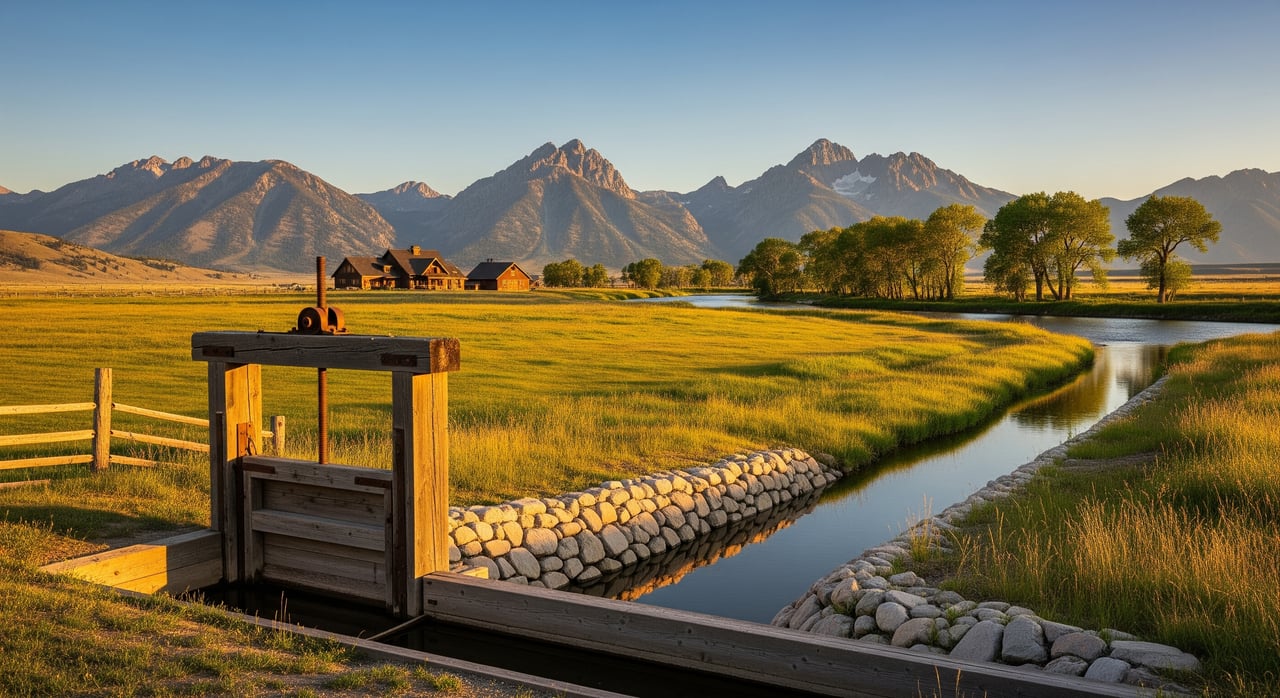
The Madison Valley has a long history of irrigated agriculture supported by ditches, headgates, and small reservoirs. Many properties around McAllister depend on surface diversions and mutual ditch systems. In this setting, the details of a water right influence daily living and long-term value.
Montana follows prior appropriation, also called “first in time, first in right.” When there is not enough water to satisfy all users, senior rights with older priority dates are served before junior rights. In dry years, junior users may face curtailment. If irrigation, landscaping, or stock water is important to you, it is essential to confirm the right’s priority date, season of use, and volume before you buy.
Key concepts you should know
Prior appropriation and seniority
A water right’s seniority is set by its priority date. Older rights are senior. During shortages, seniors are satisfied first, and junior rights can be cut back.
Beneficial use sets the scope
Every right is defined by a beneficial use such as irrigation, domestic, stock, municipal, or industrial. The allowed flow rate, volume, acres, and season all tie back to this use.
Priority date
The date associated with the right establishes where it stands in line. Earlier dates are stronger in drought conditions.
Point of diversion and place of use
The point of diversion is where water is taken from its source, like a headgate, ditch turnout, well, or spring. The place of use is the land where the water can be applied. Legal descriptions control both, so accuracy matters.
Season, flow rate, and volume
Rights often specify the months of authorized use. Flow is commonly listed in cubic feet per second or gallons per minute, and volume may be shown in acre-feet. Irrigation rights often include the number of acres.
Surface water and groundwater
Surface and groundwater are managed under the same prior-appropriation framework. Groundwater often needs a permit, although small domestic or stock uses may qualify for exemptions. Always verify what applies to your property.
Decreed rights and filed claims
Some rights are confirmed by court decrees. Others are filed claims or permitted rights still moving through adjudication. Status affects certainty, so review the records carefully.
Ditch companies and shares
In parts of the Madison Valley, water is delivered through mutual ditch systems. Owning ditch-company shares does not automatically equal a perfected water right. Always confirm the underlying appropriation, how shares transfer, and the assessments and maintenance obligations.
Non-use risk
Long periods of non-use can weaken a right. Do not assume unused rights are fully secure. Ask for documents that show recent, continuous use where possible.
Changes and transfers
If you plan to change the point of diversion, place of use, or purpose, you will need state approval. Change applications can draw public comment and take time. Build that into your planning.
How to research a property’s water rights
Gather the property details
Start by collecting:
- Full legal description, parcel number, and current owner name.
- Any seller documents that mention water, such as deed language, ditch-share certificates, assessments, irrigation maps, and well logs.
These basics make database searches and record checks much faster and more accurate.
Search public records
Use primary resources to piece together the record:
- DNRC water-rights database. Search by legal description, owner name, or source. Review the right number and status, priority date, points of diversion, place and season of use, claimed flow and acreage, and any change authorizations or pending applications.
- Groundwater well logs. Check historical well logs and any well-permit records for depth, yield, and notes on drawdown.
- Madison County Clerk and Recorder. Review deeds for water clauses and easements. Some ditch shares or water-related instruments may be recorded separately.
- County GIS and plat maps. Locate ditches, headgates, reserved easements, and parcel boundaries that matter to water access.
- Local ditch companies. Ask for assessments, delivery history, maintenance requirements, and any capacity constraints.
- Basin data. Historical streamflow information helps you understand seasonal variability and drought sensitivity in the Madison River and tributaries.
Verify on the ground and consult pros
Paper records are only half the story. You should also:
- Inspect infrastructure. Confirm the presence and condition of headgates, ditches, turnouts, laterals, and pumps. Check that the physical diversion matches the legal point of diversion.
- Review well performance. For domestic or irrigation wells, read the well log. Consider a pump test and inspection if yield is critical to your plans.
- Call local experts. DNRC regional staff, a water-rights attorney, a water-rights engineer, and experienced consultants can clarify records and advise on transfer or change feasibility.
Confirm and document key details
Before you finalize terms, confirm the items that affect your use and value:
- Whether rights are appurtenant to the land or have been severed.
- The exact priority date and season of use.
- Authorized flow, volume, and acres compared to actual current use.
- Any pending changes, protests, or adjudication actions.
- Ditch-company obligations, assessments, and bylaws.
- Whether the diversion is on your parcel or requires access across roads or neighbor land.
- Recent use history to reduce concerns about non-use.
Local red flags in the Madison Valley
In McAllister and the surrounding valley, several issues surface in transactions. Watch for:
- “Irrigation included” without a recorded right tied to the parcel.
- Ditch-company shares recorded separately and not automatically transferable.
- Diversion works in disrepair or located on neighboring property without a clear easement.
- Mismatches between DNRC records and the deed’s legal description.
- Historical use that is not documented by affidavits, maps, or filings.
If any of these appear, pause and gather more proof. You may need a professional opinion or additional contingencies to protect your position.
Shape your offer and timeline around water
Smart contingencies
Consider adding water-focused protections to your purchase offer:
- Your review and approval of DNRC water-right records and any well logs.
- Verification that irrigation water is appurtenant and transferable with the land.
- Confirmation of adequate well yield or diversion capacity.
- Approval of any DNRC change needed for your intended use.
Timing and expectations
Permits and changes can take months or longer and can draw public notice and protests. Do not rely on quick approvals. If your intended use requires a change application, build that time into your plans.
Risk allocation and closing tools
Use the contract to allocate risk fairly:
- Ask for seller representations and warranties about specific water-right facts.
- Request delivery of decree or permit numbers, ditch-share certificates, assessments, and well logs at closing.
- Consider escrow holdbacks if you need time to verify capacity or confirm transfer details.
Valuation and long-term costs
Water rights affect value. Senior, well-documented rights support pricing on irrigated parcels. Junior or uncertain rights can reduce utility and price. Also plan for ongoing costs such as ditch assessments, repairs to headgates or pumps, and maintenance of laterals.
Buyer checklist for McAllister water rights
Use this quick list as you evaluate properties:
- Collect the full legal description, parcel ID, and owner name.
- Obtain all seller water documents: deed language, ditch shares, maps, well logs, and use records.
- Search DNRC water-rights records for right numbers, status, priority date, POD and POU, season, and any change filings.
- Pull well logs and any permits, then consider a pump test if yield matters.
- Confirm ditch-company status, bylaws, assessments, and transfer requirements.
- Inspect headgates, ditches, and turnouts. Verify the legal POD matches the physical diversion.
- Verify appurtenance and transferability of rights with the parcel.
- Align your offer with water-right contingencies and realistic timelines.
Local contacts to keep in mind
- DNRC regional office for Madison County for records and guidance on permits and changes.
- Madison County Clerk and Recorder for deeds, easements, and recorded instruments.
- Madison County Conservation District for local coordination on watershed and irrigation matters.
- Local ditch companies or mutual irrigation associations for delivery, assessments, and maintenance.
- Water-rights attorneys and engineers for opinions, filings, and technical review.
The bottom line
In the Madison Valley, water rights shape how you live on the land and how your property holds value. Start early, assemble clear documentation, and verify what is on paper against what is on the ground. With the right contingencies and a realistic timeline, you can move forward with confidence.
If you want a local perspective as you evaluate specific parcels and water records around McAllister, connect with Jenny Rohrback. You will get boutique, high-touch guidance and a clear plan for due diligence that fits your goals.
FAQs
What does “first in time, first in right” mean in Montana water law?
- It describes prior appropriation, where older priority dates are senior and are satisfied before junior rights during shortages.
How do ditch-company shares relate to a property’s water right in the Madison Valley?
- A ditch share provides delivery through the ditch system, but the underlying appropriation must be documented; shares do not automatically equal a perfected water right.
Can I change the point of diversion or place of use after I buy?
- Changes typically require DNRC approval through a change application, which can take months and may involve public notice and potential protests.
Do small domestic or stock wells need a permit in Montana?
- Some small domestic or stock uses may qualify for exemptions, but requirements depend on specifics; verify what applies to the property you are considering.
How does drought affect buyers near McAllister and the Madison River?
- Seasonal variability can lead to curtailment of junior rights in dry years, so confirming priority date, season of use, and storage or delivery limits is essential.