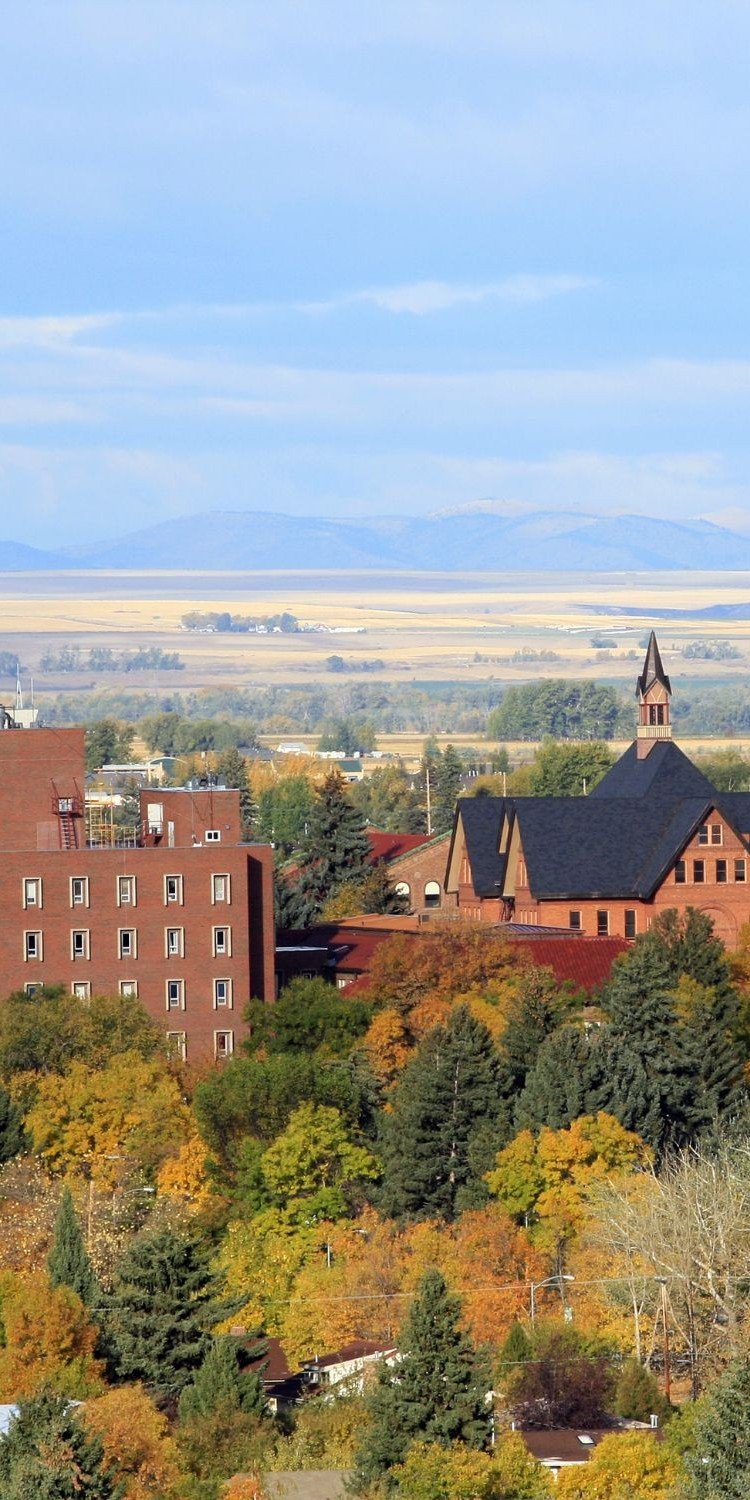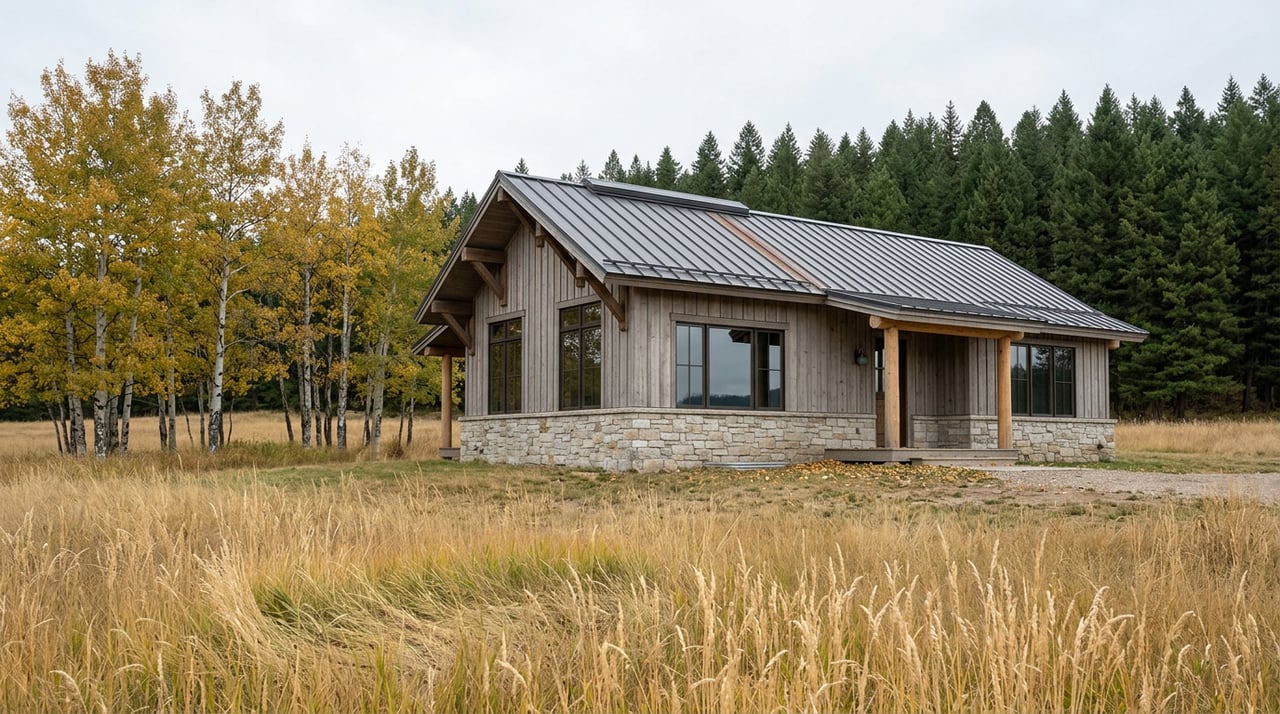
Picture two twenty-acre parcels a few miles apart in the Madison Valley near Cameron. Same mountain views, same distance to the Madison River, same access to national forest at the back fence. One carries a conservation easement. The other doesn't. A buyer who has done a little homework walks in expecting the encumbered parcel to be priced thirty or forty percent below its unrestricted neighbor, because that's the number that shows up in almost every general-interest article about conservation easements.
That buyer might be wrong, and being wrong here costs real money either way. Overpay because you assumed the easement would eventually depress resale value, or walk away from a fairly priced ranch because you assumed a discount that the current market isn't actually offering. Either mistake starts with the same flawed premise: that a conservation easement produces one predictable number.
The Assumption Almost Every Buyer Makes
The idea of an automatic discount isn't unreasonable on its face. An easement removes some of a property's development potential, and removing potential should remove value. A national ranch-brokerage's 2026 land value report, published in July, tested that assumption against real transaction data and found something messier. In one resort-market comparison the analysts studied, a conservation-restricted ranch showed a value gap in the range of 35 to 40 percent against unrestricted comparables. But the report was explicit that this was a property-specific finding tied to that particular market and that particular set of retained rights, not a formula to carry into the next deal.
The comparable listings in that same analysis didn't even treat easements consistently with each other. Some retained more building envelopes than others. Some allowed subdivision into a handful of parcels while others locked the land into a single legal description. Older improvements on a couple of those properties were viewed by buyers as renovation candidates rather than assets, which had nothing to do with the easement at all but still moved the price. The lesson for a Cameron-area buyer is not that easements never discount a property. It's that the size of any discount depends entirely on what specific rights survive the deed, and you cannot know that number until you've read the actual easement document.
What Actually Gets Restricted, and What Doesn't
Two easements recorded in Madison County show how differently these documents can be written even when the underlying goal, protecting agricultural and open-space value, is the same.
The H Double C Ranch easement, held by Montana Land Reliance, permits one residential dwelling inside a 20-acre building envelope and allows the property to be split into three separate parcels, two divisions total. The Peterson Ranch II easement, covering roughly 2,905 acres and funded in part through federal grassland conservation dollars, allows nonresidential outbuildings within two separate 10-acre building envelopes but limits the property to transferring as only two parcels, full stop.
| H Double C Ranch | Peterson Ranch II | |
|---|---|---|
| Building envelope | One 20-acre envelope, one residence | Two 10-acre envelopes, outbuildings |
| Allowed parcel divisions | Three parcels (two divisions) | Two parcels only |
| Easement holder | Montana Land Reliance | Montana Land Reliance, with NRCS grassland funding |
Neither of these restricts grazing, hunting, or the day-to-day work of running cattle. Both keep the land in agricultural production while capping how it can eventually be carved up and built out. A buyer comparing two easement-encumbered ranches near Cameron needs to know which version they're looking at, because a single 20-acre building envelope on a compact parcel behaves very differently than two envelopes spread across nearly 3,000 acres.
A Working Example Elsewhere in Madison County
The clearest illustration of why a rancher chooses this path at all showed up in Madison County this summer. The Bozeman Daily Chronicle reported in July 2026 that a 394-acre working ranch near McAllister, owned and operated by Max Robinson, had been placed under a voluntary conservation easement through the Gallatin Valley Land Trust. Robinson runs about 100 head of beef cattle on the property. The land qualified for federal cost-share funding through the Natural Resources Conservation Service's Agricultural Conservation Easement Program after a prior survey found that more than half the ranch's soils were the kind the program is designed to protect, which made the funding path viable in a way it wouldn't have been on land with lower-quality soils.
GVLT's conservation program manager, Crystal Beckman, described the process as working at the landowner's own pace over several years, with no guarantee the funding would come through until it did. Robinson still owns the ranch. He still runs cattle on it. What changed is that the development rights on that land are now permanently held by the land trust, and any future owner inherits that same restriction. The ranch didn't get more affordable to build a subdivision on. It got permanently unavailable for one, which is precisely the outcome a neighboring landowner with an unrestricted view corridor might be willing to pay something extra to guarantee.
Why the Discount Has Been Narrowing
That last point is the mechanism most buyers miss. An easement doesn't just remove rights from the parcel it sits on. It also removes future subdivision risk from every ranch and homesite within eyeshot of it. Buyers who move to the Madison Valley specifically for open sightlines and low-density neighbors are not only shopping for land they can build on. They're also shopping for permanent certainty about what will never get built next door, and a recorded easement on the adjoining ranch delivers exactly that.
Industry trackers who follow Montana ranch sales have noted that the gap between encumbered and unencumbered pricing has started to narrow rather than widen. Part of that shift comes from a buyer pool that increasingly includes people who want the conservation outcome for its own sake, not just the acreage. When conservation-minded buyers are competing for the same limited inventory as traditional ranch buyers, a document that used to function purely as a price suppressant starts pulling some of its value back the other direction.
None of this means every easement-protected listing near Cameron is priced at parity with unrestricted land. It means the old rule of thumb, that an easement equals an automatic markdown, is no longer something you can assume your way into. You have to look at the specific parcel.
What This Means If You're Comparing Land Near Cameron
If you're weighing an easement-protected ranch against something like a Sphinx Mountain lot or a larger holding closer to the national forest boundary, a few questions do most of the work before you make an offer.
- Ask for the recorded easement deed itself, not the MLS summary. Building envelope size, count, and location are usually buried in the legal document, not the listing remarks.
- Confirm who holds the easement. Montana Land Reliance, Gallatin Valley Land Trust, and NRCS-funded agreements each write terms a little differently, and the holder's monitoring practices matter for how the property gets used going forward.
- Check how many parcels the property can legally be divided into, and whether that number matters to your plans. A ranch limited to two parcels behaves differently for resale than one allowed three.
- Compare the easement property against a genuinely unrestricted parcel in the same stretch of valley before assuming either one is the better value. The gap, if there is one, will be specific to those two properties.
- Ask whether traditional uses, grazing, haying, hunting, fishing, are addressed explicitly in the deed. Most easements preserve them, but the specifics vary.
A Few Common Questions
Does a conservation easement mean I can't build a house at all? It depends on the easement. The H Double C example above allows one residence in its building envelope; the Peterson Ranch II example allows nonresidential outbuildings in its envelopes.
Who checks on the property after I buy it? Land trusts typically monitor easement properties on an annual basis to confirm the terms are being followed. According to the Gallatin Valley Land Trust's own landowner guidance, that monitoring does not involve day-to-day input on ranch management decisions.
Can I still run cattle, hunt, or fish on easement-protected land? Generally yes. Agricultural and traditional recreational uses are the activities these agreements are usually written to protect, not restrict.
A conservation easement on a Cameron-area ranch is not a shortcut to a bargain, and it's not a red flag either. It's a document with specific terms that reward the buyer who reads them closely and can cost the buyer who assumes a percentage discount will show up on its own. If you're comparing encumbered and unencumbered land in the Madison Valley and want someone who can walk the actual deed language with you before you write an offer, Jenny Rohrback Real Estate is a good place to start. Request your personalized Madison Valley market valuation and bring the questions.
This article is general information, not legal, tax or financial advice. Consult a qualified professional about your situation.